
Operate in context
The module is designed around the operating workflow rather than as an isolated feature list.
Vamdiya is designed as a shared operating foundation so industry products can use common identity, roles, business context, workflows, finance and integration boundaries without rebuilding the same platform services repeatedly.

Vamdiya is designed as a shared operating foundation so industry products can use common identity, roles, business context, workflows, finance and integration boundaries without rebuilding the same platform services repeatedly.
The module is designed around the operating workflow rather than as an isolated feature list.
Related Vamdiya modules can share people, financial and workflow context where the deployment requires it.
Start with the useful operating surface and expand without rebuilding the business context around it.
The platform provides shared operating context while each product keeps the workflow identity required by its industry or business function.
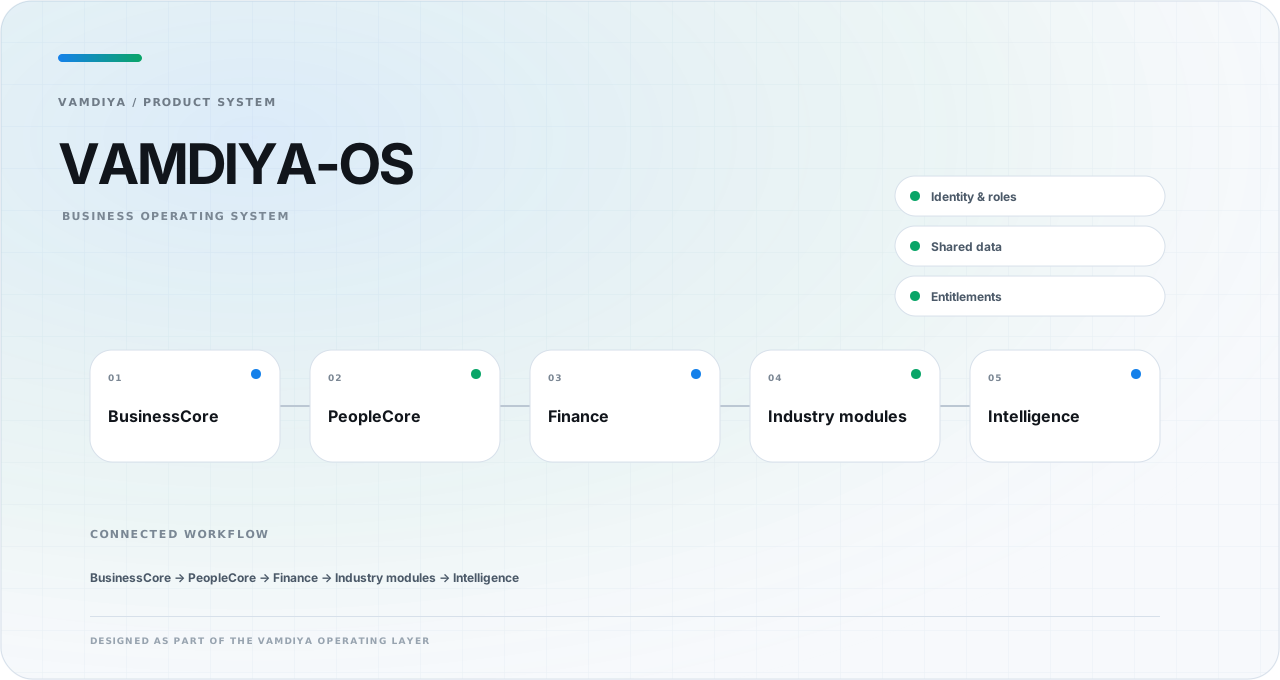
The platform model reduces duplicate identity, permissions, workflow and business-context logic across separate industry products.
Use consistent identity and role boundaries across the operating surfaces enabled for a deployment.
Allow people, finance, documents and workflow events to connect where the product boundary requires it.
Enable the useful operating surfaces without forcing every customer into the entire product portfolio.
Vamdiya separates shared platform responsibilities from industry-specific workflows so deployments can remain understandable as they grow.
Keep tenant, role, module and integration boundaries visible in the architecture.
Use automation and AI inside approved context and workflow controls rather than outside the business system.
Design important operating actions so authorized teams can understand what happened and where responsibility sits.
Map the users, products, integrations and governance boundaries required by the deployment.