
Operate in context
The module is designed around the operating workflow rather than as an isolated feature list.
Core OS provides the common identity, role, tenant, workflow and business-context services that allow Vamdiya products to connect without collapsing their industry-specific workflows into one generic application.

Core OS provides the common identity, role, tenant, workflow and business-context services that allow Vamdiya products to connect without collapsing their industry-specific workflows into one generic application.
The module is designed around the operating workflow rather than as an isolated feature list.
Related Vamdiya modules can share people, financial and workflow context where the deployment requires it.
Start with the useful operating surface and expand without rebuilding the business context around it.
Shared platform services provide the context and controls required by enabled products while keeping responsibility boundaries explicit.
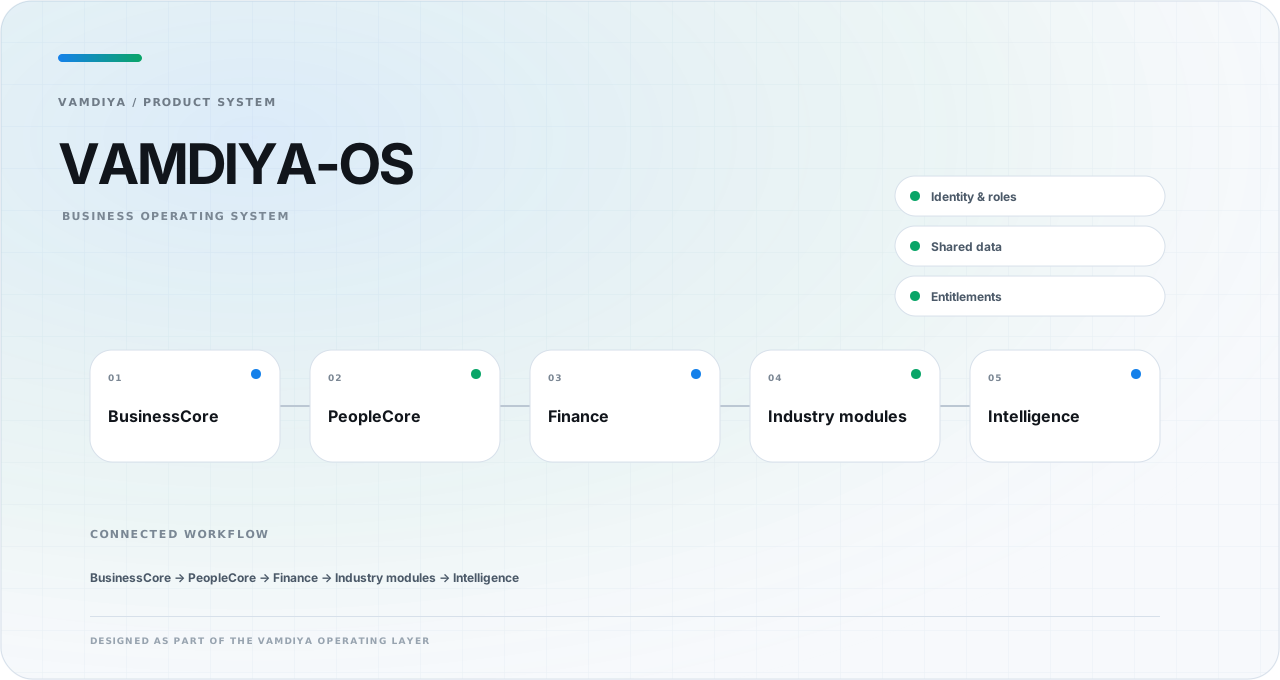
A connected Business Operating System needs reusable platform services but also needs clear boundaries so vertical workflows remain understandable.
Keep authenticated users and tenant scope explicit before product workflows act on business data.
Separate what a user is allowed to see or do from the implementation details of individual product screens.
Reuse common document, workflow, notification and financial context where a product needs it.
The Core OS model is intended to reduce duplicate platform logic while allowing healthcare, education, property, fleet and other products to preserve their own domain workflows.
Common platform services do not need to be reinvented for each industry product.
Products can exchange approved context through defined platform contracts rather than hidden dependencies.
A deployment can add products or modules without rebuilding the identity and operating foundation around them.
Map the users, products, integrations and governance boundaries required by the deployment.