
Operate in context
The module is designed around the operating workflow rather than as an isolated feature list.
Vamdiya integrations are designed around controlled data exchange and workflow handoffs so external systems can participate in business operations without becoming hidden sources of authority.

Vamdiya integrations are designed around controlled data exchange and workflow handoffs so external systems can participate in business operations without becoming hidden sources of authority.
The module is designed around the operating workflow rather than as an isolated feature list.
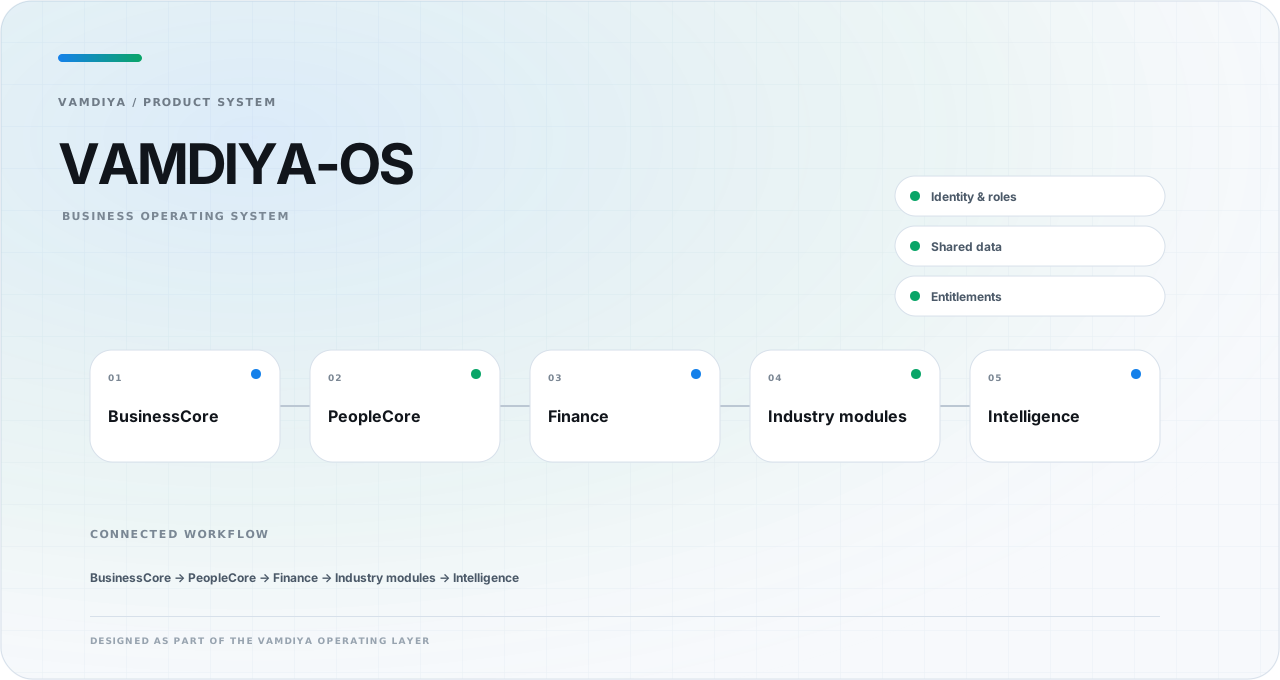
Related Vamdiya modules can share people, financial and workflow context where the deployment requires it.
Start with the useful operating surface and expand without rebuilding the business context around it.
Integrations should carry the context required by the business workflow while preserving ownership, authentication and explicit control over what can happen next.
An API call is not the full integration. Reliable operations also need ownership, validation, failure handling and a clear workflow around the exchanged data.
Give an integration only the access and scope required for the approved workflow.
Check the data and business state before downstream systems or users act on it.
Keep integration outcomes visible enough for authorized teams to investigate failures or reconcile important events.
Depending on the deployment, Vamdiya can be integrated with external APIs, messaging, CRM, finance, data and other business systems through defined contracts.
Connect lead, customer and follow-up context with the workflow that owns the next action.
Use controlled messaging handoffs for alerts, reminders or customer communication where appropriate.
Exchange approved operational data with reporting or downstream systems without bypassing source-of-truth boundaries.
Map the users, products, integrations and governance boundaries required by the deployment.