
Operate in context
The module is designed around the operating workflow rather than as an isolated feature list.
Vamdiya separates shared platform services from product-specific workflows so multiple business domains can operate on a connected foundation without losing tenant, role or domain boundaries.

Vamdiya separates shared platform services from product-specific workflows so multiple business domains can operate on a connected foundation without losing tenant, role or domain boundaries.
The module is designed around the operating workflow rather than as an isolated feature list.
Related Vamdiya modules can share people, financial and workflow context where the deployment requires it.
Start with the useful operating surface and expand without rebuilding the business context around it.
Architecture starts with who is operating, in which tenant and product context, before a workflow reads or changes business state.
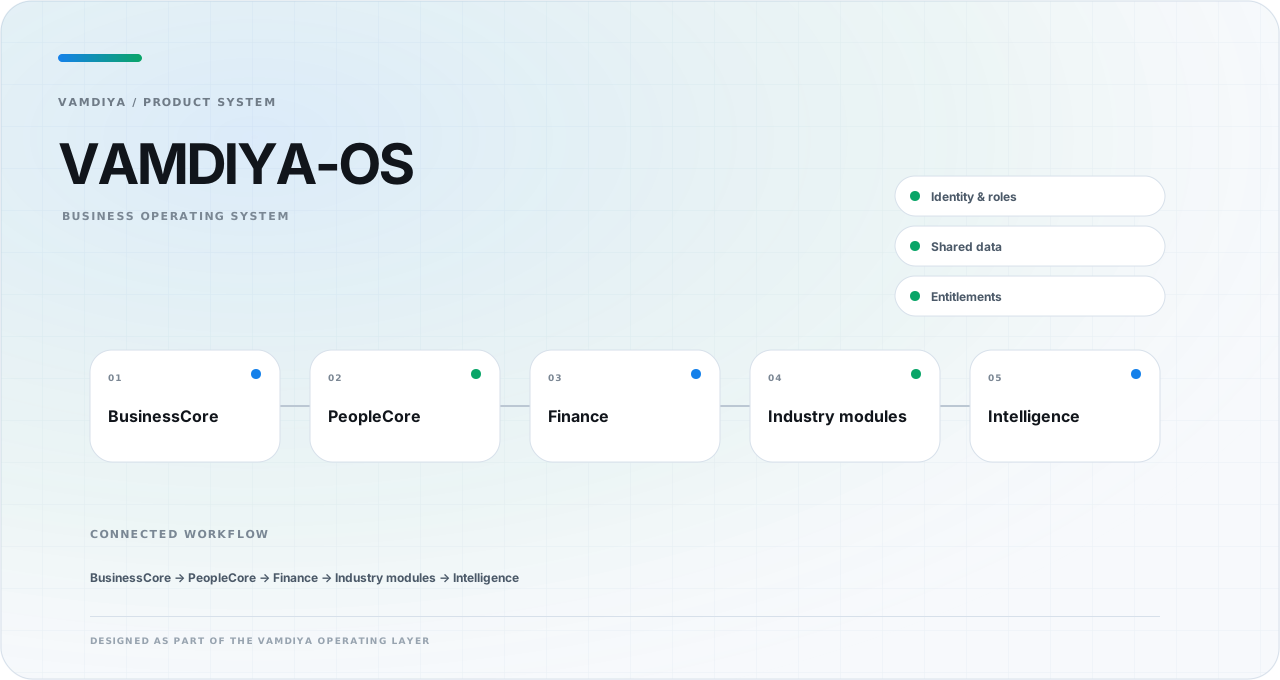
The objective is to create reuse without turning every industry workflow into one undifferentiated code path.
Keep tenant context explicit across authentication, data access and enabled operating surfaces.
Allow products to specialize around their domain while using shared platform services through defined contracts.
Make authorization an explicit system concern rather than a UI-only convention.
Vamdiya is designed so AI and automation can work with approved business context and bounded tools while important decisions remain governed by the surrounding workflow.
Give AI or automation only the business information required for the task and user context.
Route actions through explicit tools, permissions and workflow rules instead of unrestricted system access.
Keep people in control where judgment, approval or business accountability matters.
Map the users, products, integrations and governance boundaries required by the deployment.